Scientific Name: Thevetia nerrifolia or Thevetia peruviana or Cascabela thevetia
ICUN
Status: Not Evaluated
|
It is also
called Exile Tree or the Lucky Nut or Be-Still.
The Genus
Thevetia in the honor of M Andre
Thevet a French Monk of 16th CE who explored and collected the
plant from Brazil and Guiana. The Species nerrifolia means hanging
leaves like Nerium or Oleander.
 |
| Thevetia nerrifolia- the yellow oleander |
It is a
member of Periwinkle family, there is no relation between these Thevetia and
Oleander. It originates from South America and West Indes while Oleander is
from Mediterranean.
 |
| Thevetia on Left and Pink Nerium on Right |
 |
| On left White Oleander: On right Yellow Oleander |
It is also
called Cascabela thevetia- Cascabel
is Spanish term for Rattle Snake. It indicates that the plant’s toxicity is
comparable to the venom of a rattle snake.
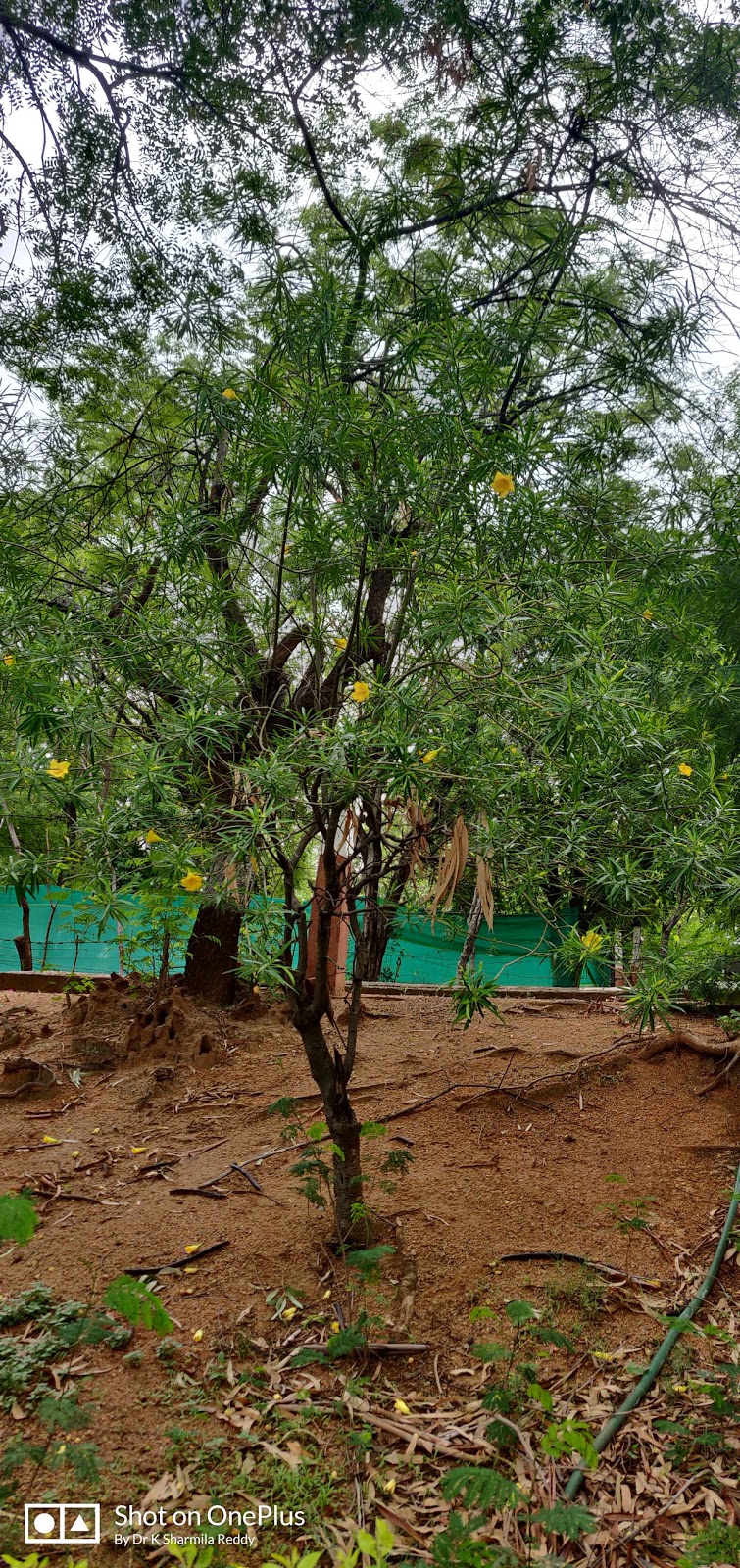
Thevetia is
a largely expanding shrub of 8-10 feet high, easily recognised by its narrow,
pointed leaves pointing in every direction and scattered yellow flowers.
These fine,
narrow leaves never seem to hold still, always shimmering in the wind. Therefore-
Be Still.
 |
| Be Still please! |
Its waxy,
bell shaped yellow flowers are made up of five overlapping petals
 |
| 5 Waxy overlapping petals |
 |
| Bell shaped flower |
These are
slightly fragrant and short lived. They droop and fall off the next day
covering the ground with their bright, golden yellow blossoms.
 |
| Yellow flower, Crab Apple shaped fruit and Narrow pointed leaves |
 |
| A pathway smeared with withered flowers |
Its fruit is
of crab apple appearance. Inside is a woody nut containing two seeds. These are
called lucky seeds or lucky beans. These are made into pendants and charms or
kept in pocket for luck.
 |
| Stages of reproduction- bud, flower, fruit and seed |
All parts of
the plants are poisonous including the milky sap which exudes from stems and
shoots when cut. They contain Cardiac Glycosides called Cardenolides-
Thevetin A, Thevetin B, Nerrifolin, Thevetoxin, Ruvoside etc.
 |
| Poisonous milky sap containing Cardenolides |
In Indian
subcontinent, swallowing its seeds is one of the preferred methods of suicide
in the villages.
Goats and
Cattle don’t feed on this plant; therefore it is commonly placed along highways
and boundary walls.
These plants
toxins are used as biological pest control.
Oil from its
seeds is used to make a paint with anti-fungal,
anti-bacterial and anti-termite properties.
Finally Mom adds an another point, remembering her childhood, they used to play with these lucky seeds a game called kachakayalu.



 These fine,
narrow leaves never seem to hold still, always shimmering in the wind. Therefore-
Be Still.
These fine,
narrow leaves never seem to hold still, always shimmering in the wind. Therefore-
Be Still.


Doctor-soldier and bunch of traits. A true salute to your personality.
ReplyDeleteYou have an wonderful taste mate. That's really very impressive.👍🤩
ReplyDeleteI'm too interested to collect various types flowers n taking pics n post...but after seeing ur interesting in flowers my internally interest alSO developed about d flowers n their HISTORY...
ReplyDeleteThnx...dr...
Nice collection of photos and so much of knowledge about flowers,.all the best .
ReplyDeleteCommendable 🙏
ReplyDeleteSimply superb
ReplyDeleteVery good information
ReplyDeleteSuch a nice & informative piece of erudition. Keep writing about the bounty& diversity of mother nature. People call it kaner in hindi. Usually offerd to lord Shiva.
ReplyDeleteAmazing photoshoot doctor
ReplyDeletePerfect for wallpapers and extracted information for upcoming students. Hats off mam
Very imperative
ReplyDeleteNice n very impressive...
ReplyDelete